
Why I read Marx – and you should, too

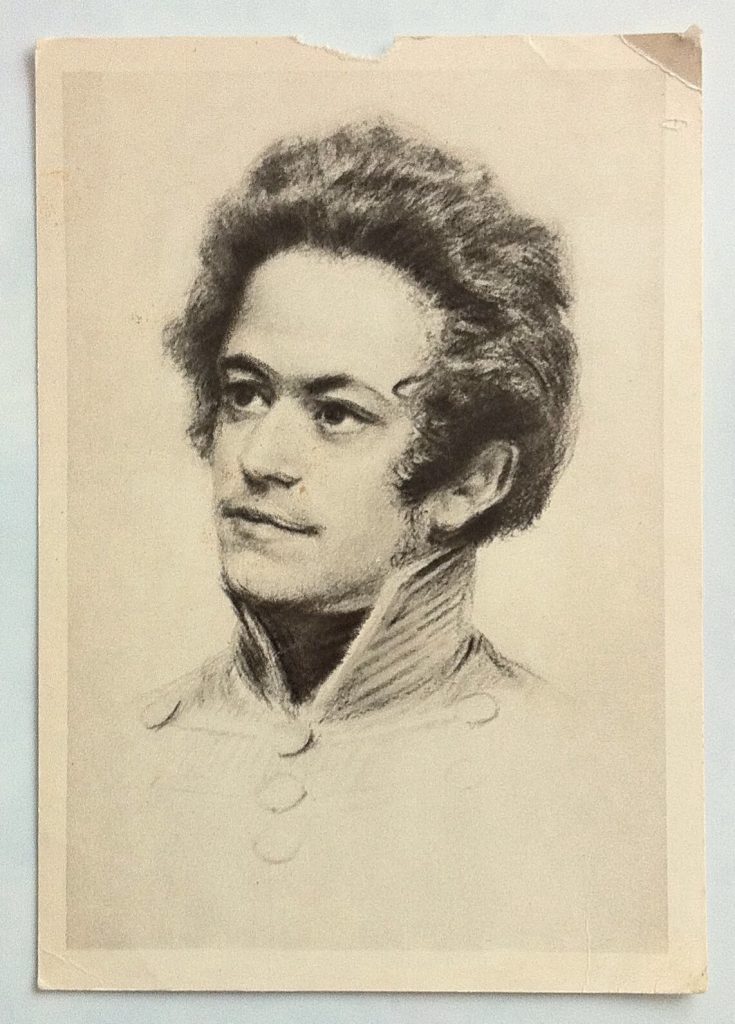
Young Karl Marx. Гринштейн, Public domain, via Wikimedia Commons

I started you off on Marx last time and I am continuing today with thoughts on what I took away from reading Marx and why that makes it worth your while, too.

It is always difficult, to approach someone as divisive as Karl Marx with an open mind and not to judge either good or bad beforehand. Not because judging itself was bad, it is not, or unnecessary, it is. But I always feel that I gain most by stepping back first and appreciating the text in its ambivalence – and than using that to judge and act appropriately. I feel those who want to rush to the inevitable conclusion, namely, that capitalism is bad and the root of all evil.

Looking at the early Marx, however, gives us more. A compelling reason WHY that might be so and hence a new look at what might work against it.

I guess, I have given away where I stand. You go and find your own standpoint.

Listen to the episode – links can found in the sidebar and visit the episode page to find some starting links. Hope you enjoy and see you soon!


Ambivalent Marx

Photo Credit: Jan Höppner

That was a bit of a surprise, although maybe it shouldn’t have been – this turned out to be the longest episode yet. But, then again, I tried my best on Marx and that wasn’t going to come easy. And, I tried to make some important point on tolerating ambivalence, which is really helpful when reading political theory and outright essential when living on planet Earth, which, I guess, most of my listeners do. As always, there is a page for the episode here and I welcome your comments very much, they really help to make the podcast better. For cheaters, Marx starts about 12 Minutes in – but you really should not miss those first twelve minutes ;-).

What does it all mean? – Going wrong four ways

There is a whole lot of things going around my head, that I would like to put out there. Still, it is important to just briefly go into some more general questions on what political theory texts can and cannot do for us. Because I do take liberties and I believe in my right to do so and that it is actually helpful. But I do not dismiss the concerns that many people have had with people doing this in a sort of cavalier way. A lot can go wrong if you do that.

Christchurch College, Oxford. Diliff, CC BY-SA 3.0 https://creativecommons.org/licenses/by-sa/3.0, via Wikimedia Commons

So, the newest episode looks at some ways we might want to look at political theory texts – historically, but I believe even beyond that. How to understand the meaning of things, really. And it gives some very handy perspectives for you to take along into your life. So this is not some boring episode on methods, more of a reprieve from immediate problems to make sure our posture is right, before we proceed. So enjoy my look at Quentin Skinner’s four mythologies – and makeup your own mind. As always I provided a page on the episode for you with some resources you might find useful.

Truth Revisited

There is always more to say and sort through and this is my attempt to supplement the trilogy on truth with some ideas that might have remained shady, partly because I am not sure how much they are Arendt’s, Foucault’s or Havel’s. They might just be what I make of them. And seeing that this is 2026, which might turn out to be the craziest year I have lived through in a long time (at least 34 years), this episode might end up being all over the place. It is, however, very much thought-provoking. And that is what this is all about, after all.

As always, I have created a page with some resources, that might take your thoughts even further. Enjoy! And get back to me with comments, ideas and questions, please, I would love to make this even better.

Finally – Foucault!

This took longer than I hoped, but I think it is worth the wait. Because Foucault offers yet another important piece of thought on truth that – I believe – might change your perspective. As usual, the episode is available “wherever you listen to podcasts” and I hope you enjoy it. If you’d like to start your own deep dive, I have created a page on Foucault that might serve as a starting point.

Michel Foucault. Drawing by Nemomain, CC BY-SA 3.0 https://creativecommons.org/licenses/by-sa/3.0, via Wikimedia Commons